
Shibuya vs Shinjuku: Which Is Better to Stay In?
Shibuya or Shinjuku to stay? Compare transport, nightlife, shopping, hotels and crowds side by side, see both on a 3D map and pick the right base.
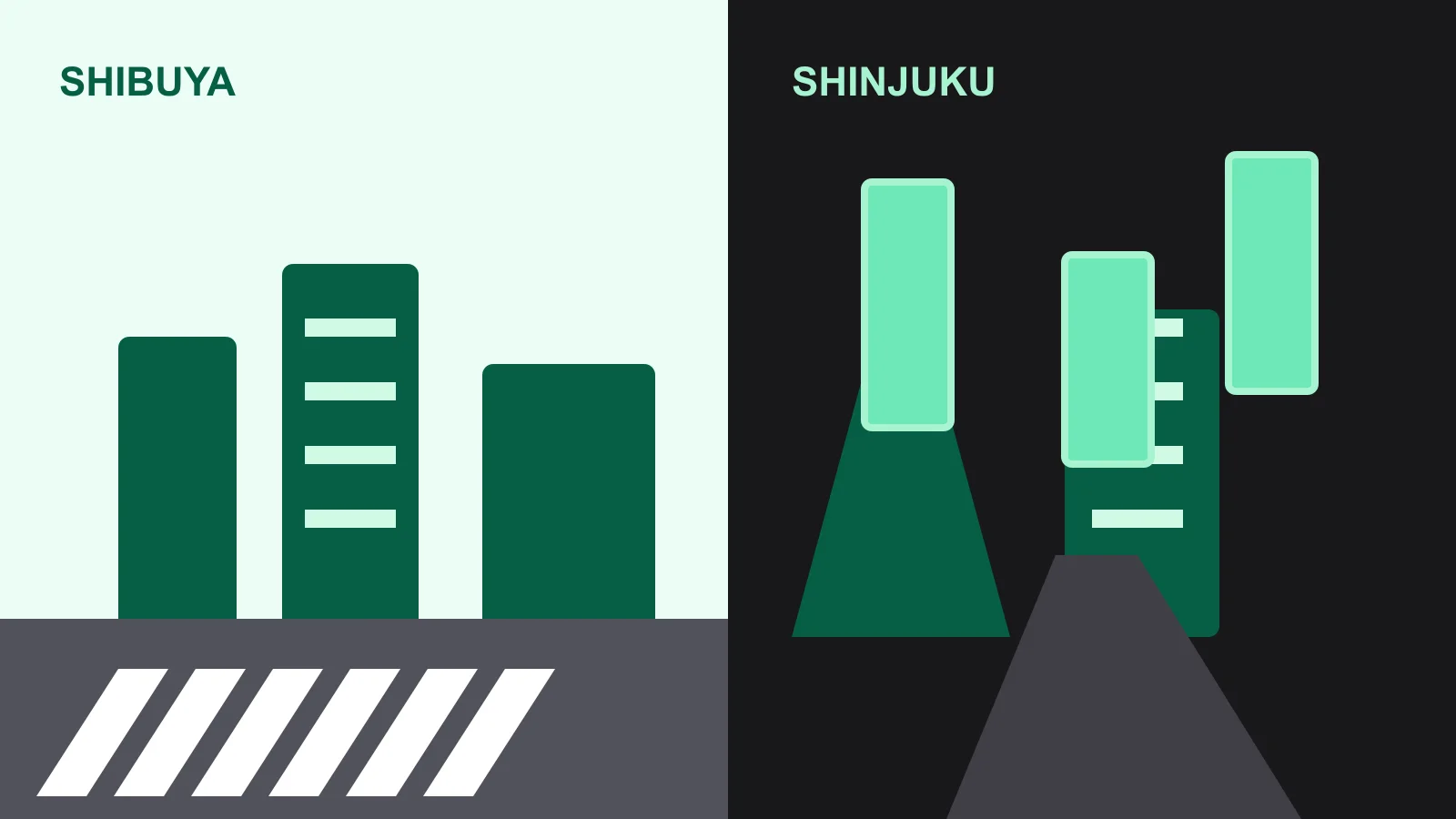
Explore Tokyo districts
Shibuya 渋谷
Tokyo's youth and fashion hub, built around the world-famous scramble crossing, endless shopping and a lively after-dark scene.
Best for: First-time visitors, Shopping, Nightlife, Street photography
Select a place with the keyboard
Shibuya and Shinjuku side by side
The comparison is an editorial guide to choosing a base, not a hotel ranking. Price bands describe relative positioning and do not quote room rates. Both areas deserve a street-level check before you commit.
| Question | Shibuya | Shinjuku |
|---|---|---|
| Vibe | Fashion, crossing and evening energy | Mixed dining, gardens and bright entertainment streets |
| Transport & airport access | Yamanote and several subway lines; check Narita Express services | Yamanote, Chuo and subway options; check Narita Express services |
| Day-trip access | Check transfers for your exact trip | Odakyu Romancecar toward Hakone; Fuji Excursion toward Kawaguchiko |
| Nightlife | Shopping-and-evening base | Golden Gai, Kabukicho and dining alleys |
| Shopping | Fashion-oriented browsing | Department stores and a broader station-area mix |
| Food | Choose the individual restaurant and street | Wide dining choice; avoid assuming every alley suits every group |
| Crowds & noise | Check crossing-side streets and room orientation | Check entertainment streets, station exits and room orientation |
| Families | Works when shopping and skyline interests fit | Works when gardens, dining and mixed sightseeing fit |
| Price level | $$–$$$ relative editorial positioning | $$–$$$ relative editorial positioning |
| Best for | Travelers prioritizing shopping and evening atmosphere | Travelers prioritizing variety and day-trip rail choices |
Transport and airport access
Both Shibuya and Shinjuku are on the JR Yamanote Line. Shibuya adds the Ginza, Hanzomon and Fukutoshin subway lines; Shinjuku adds Chuo Line options and the Marunouchi subway, with other entrances and neighboring stations depending on the hotel. The practical question is which line and entrance your journey needs. A room on the wrong side of a busy station can erase the advantage you expected from a familiar station name.
JR East's Narita Express route information includes both areas. Check the service for your arrival date before deciding how to reach the hotel. For day trips, Shinjuku is the departure reference for Odakyu's Romancecar toward Hakone and the Fuji Excursion toward Kawaguchiko. These route names are verified; departure schedules, reservation conditions and journey times must be checked with the operator for your travel date.
Nightlife and evening plans
Shinjuku suits visitors who want its small dining streets and entertainment areas to be part of the evening. Golden Gai, Kabukicho and Omoide Yokocho have different settings, so choose according to the individual venue and your comfort with busy streets. Shibuya makes sense when the crossing, shopping and an evening view fit the same day. Neither choice requires you to go out late every night.
Look at how you will return to the hotel before selecting a nightlife-based stay. A short, understandable walk can be useful, but a central entertainment address may also bring noise. Check the room orientation and recent comments about sleep rather than treating a whole district as uniformly loud or quiet.
Shopping: choose the stores before the base
Shibuya is our preference when fashion-oriented browsing is a major purpose of the trip. Shinjuku suits a broader department-store and station-area shopping plan. These are useful editorial distinctions, but the stores you want are more important than a general label. Check their locations and current opening details, then decide whether returning to them makes staying nearby worthwhile.
A shopping-first stay can help when you expect repeat visits or want to drop bags at the room. If shopping is a short stop between sightseeing days, a better room or easier station approach elsewhere may be the more useful choice. Compare luggage space and your final departure route, especially if shopping will increase what you carry home.
Sightseeing around each base
Shibuya brings the crossing, Hachiko and Shibuya Sky into the central sightseeing group. The wider guide also includes Meiji Shrine and Yoyogi Park around the Harajuku side. Shinjuku pairs its garden, government-building view and dining streets in a different group. These are not promises that every hotel is beside every stop; use individual place markers to see how your day spreads out.
Choose the base that fits the first and last stop of your typical day, then group the rest of the city into separate outings. You can visit both districts without changing hotels. Leave space for meals, rest and a weather-dependent view rather than scheduling every named attraction simply because it appears nearby on the map.
Shibuya Sky guideMeiji ShrineShinjuku GyoenTokyo Metropolitan Government view
Hotels and relative price level
Both districts offer choices that vary by exact address, room and booking terms. Our $$–$$$ band is a relative editorial shorthand, not a nightly price or a claim about every property. Compare the total for your dates, party size, bed arrangement and cancellation needs. A lower headline rate may not represent the same room or terms as the hotel beside it in a search result.
For a quieter stay, inspect the street and room orientation instead of abandoning an entire district. For a busy evening base, make sure the walk back is clear and the room still gives you the sleep you need. Search results below let you compare dates without implying that a specific hotel has been personally reviewed.
Which suits families?
Either district can work when the room and daily plan fit. Shinjuku can suit a mixed itinerary with a garden visit and varied dining, while Shibuya can suit older children who share shopping or skyline interests. Check occupancy limits, bed setup, elevator access and the actual walk with luggage before relying on a neighborhood recommendation. A quieter side street can be useful in either area.
If your priorities are museums, park time or temple streets, compare Ueno and Asakusa as well. The goal is a comfortable daily rhythm, not winning a two-district debate. Agree on how much evening activity the family wants and how you will return to the hotel when someone needs a break.
Street-level safety and practical choices
Tokyo police warn visitors about street touts and excessive charges in entertainment areas, including Kabukicho. Do not follow unsolicited invitations into bars or clubs. Choose venues deliberately, check published charges and keep control of your belongings. This is practical behavior guidance from the official visitor advice, not a claim that every street or hotel in Shinjuku is unsafe.
Select a return route you can understand and a hotel entrance you feel comfortable using. If you prefer less late-evening activity, choose a calmer street and read current location comments before booking. The same hotel-selection habits are useful in Shibuya. There is no responsible way to promise safety or quiet based only on a district name.
Our verdict
Choose Shinjuku for a varied first trip, especially if dining choices and operator-confirmed day-trip departures matter. Choose Shibuya if shopping and evening atmosphere explain why you want to stay in this part of Tokyo. Then compare two real hotel addresses, not two abstract neighborhood reputations. The better room and entrance may settle the decision more clearly than another list of attractions.
Keep one base for a short visit unless a hotel move solves a specific travel need. Use the district map to group sightseeing days, and revisit the wider hotel-area guide if neither western district fits the trip you want.
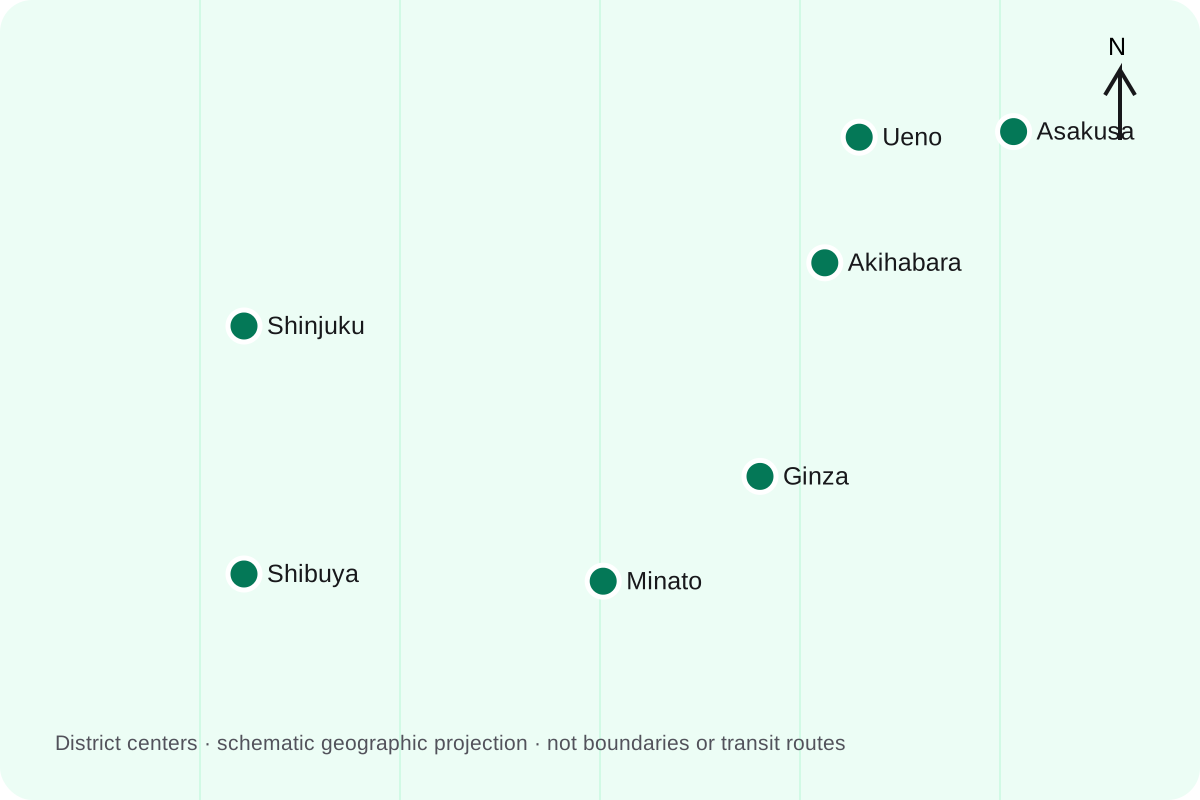
Shibuya hotel-area adviceShinjuku hotel-area adviceShibuya district guideShinjuku district guideCompare all seven districts on the map
Frequently asked questions
Is Shibuya or Shinjuku better for first-timers?
Shinjuku is our all-round recommendation for a varied first trip. Shibuya can be better when shopping, the crossing and evening city views dominate the plan. Compare the exact hotel address and room before treating either district as a universal winner.
Which is better for nightlife?
Both work for an evening-oriented stay. Shinjuku suits visitors drawn to Golden Gai, Kabukicho and its dining alleys; Shibuya suits those who want the crossing, shopping and evening activity in the same base. Check noise and your walk back to the hotel.
Which is better for shopping?
Choose Shibuya when fashion browsing is a major priority. Shinjuku suits a broader department-store and station-area shopping plan. Look up the stores you actually want to visit before making shopping the reason for a hotel choice.
Is it easy to get between Shibuya and Shinjuku?
Both stations are on the JR Yamanote Line, so there is a direct rail option between them. Check the current operator route and your station entrance. This guide does not promise a fixed journey or walking time.
Is Shinjuku safe to stay in at night?
Choose a hotel street and return route you feel comfortable using. Tokyo police warn visitors about street touts and excessive charges in entertainment areas, including Kabukicho. Do not follow unsolicited invitations into bars; check prices and venue information before entering.
Source & review
Last verified October 6, 2026. Hours, prices, access and closures can change. Check the operator’s site before your visit.
- Tokyo Metro Fukutoshin Line stations
- JR East metropolitan railway map
- Tokyo Metro Ginza Line stations
- Tokyo Metro Marunouchi Line stations
- Tokyo Metro Hibiya Line stations
- Tokyo Metro Hanzomon Line stations
- Toei Subway stations
- JR East Narita Express
- Keisei Skyliner
- Tokyo government area and ward guide
- Odakyu Romancecar: Shinjuku to Hakone
- JR East: Fuji Excursion
- Tokyo police visitor safety advice