
Nikko Day Trip from Tokyo
The direct Tobu day from Asakusa: reserve the limited express, keep the shrine plan compact, and add no more than one mountain bus leg.
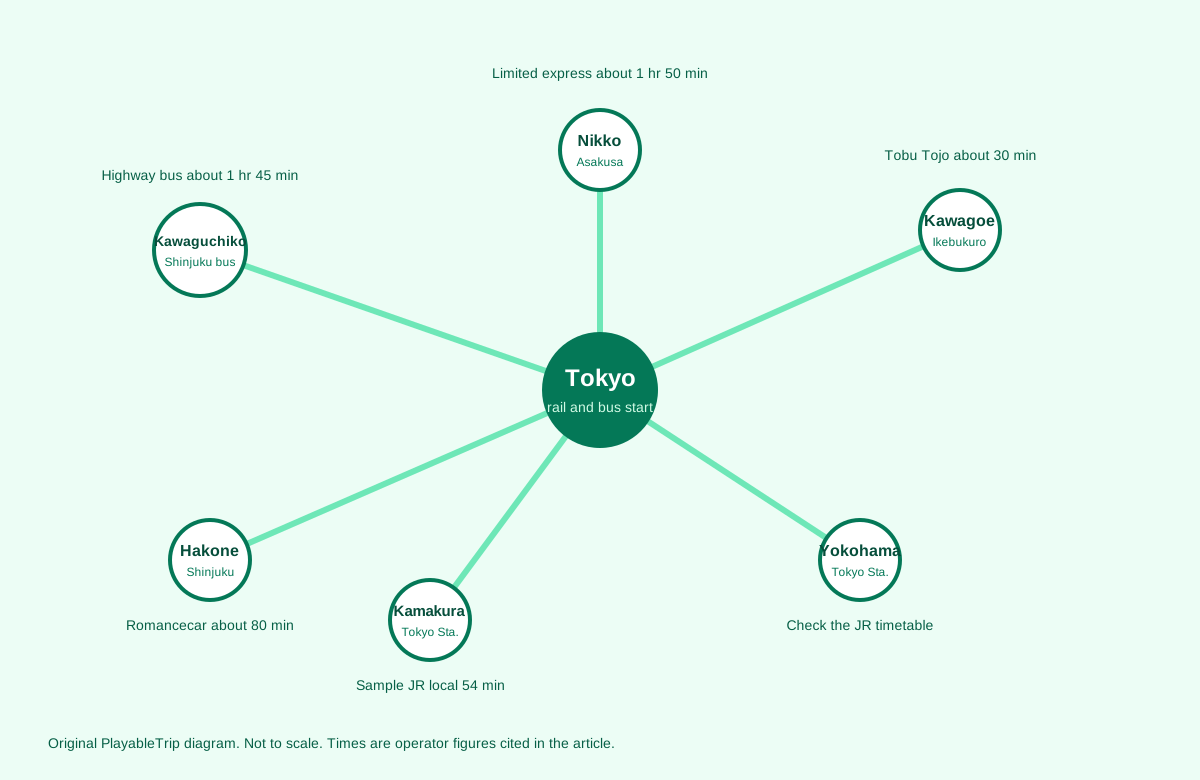
Limited express from Asakusa
Tobu's access page publishes approximately 1 hour 50 minutes for a direct limited express from Tobu Asakusa Station to Tobu-Nikko. The same page shows other patterns, including a connection at Shimo-imaichi, so read the itinerary for the train you are actually booking. A time printed beside one pattern is not a promise that every departure follows it.
Use Asakusa as the Tokyo starting point for this guide. Tobu also shows direct limited-express routes from Shinjuku and Ikebukuro, but explicitly says that route is not covered by the Nikko Pass. If you want to use the pass and keep the morning simple, choose the Tobu departure from Asakusa and reserve the limited-express seat separately.
A day trip spends nearly four hours on the headline train ride before local walking or buses. Take an early outbound service and choose the return before building the middle of the day. The timetable and train type matter more than a generic map estimate, especially when a missed return turns a long outing into an unplanned overnight decision.
Tobu access and limited-express informationStaying in Asakusa
Nikko Pass and the limited-express ticket
Tobu offers a World Heritage Area pass and an All Area pass. The World Heritage version is aimed at the shrines, temples, and Kinugawa area; the All Area version extends farther toward Oku-Nikko and Lake Chuzenji. Both products have multi-day validity, and neither includes shrine or temple admission fees.
Most importantly, Tobu states that the Nikko Pass does not include a limited-express ticket. You need the pass or base-fare product that matches your route plus a separate limited-express ticket for the reserved train. Tobu says limited-express tickets can be purchased from one month before the boarding date. Check the operator page for the current pass coverage and price rather than copying a fare from an old itinerary.
For a one-day shrine visit, compare the World Heritage pass with ordinary tickets for the journeys you will actually take. The All Area pass covers destinations that this compact day deliberately leaves out. A pass can simplify local transport, but it does not create more hours or remove the separate limited-express requirement.
What fits in one day
Make the World Heritage shrine and temple area the core of the day. From the stations, use the local bus or walk toward the historic area, then give the complex enough time instead of collecting distant place names. The return to the station is part of the plan, not spare time after the final sight.
If you add a bus leg, choose one purpose and confirm the return service. Lake Chuzenji and the waterfalls are farther into the mountains; combining both with the shrine area and a slow meal makes the Tokyo return fragile. Tobu's own All Area pass material treats the wider nature area as a broader trip, and the sample material includes overnight planning. That is a useful warning against forcing every highlight into one winter day.
In winter, check the bus operator's current service and road conditions before leaving Asakusa. A limited express can reach Tobu-Nikko while a mountain bus is delayed, reduced, or unsuitable for the loop you imagined. Keep the shrine-only version as the fallback and do not make a distant bus connection the only way to catch the reserved train home.
Use Asakusa as the Tokyo base
Asakusa removes a cross-city transfer before the Tobu train. If Nikko is the day that matters most, the Asakusa section of the where-to-stay guide is the relevant base comparison. Senso-ji also works naturally after the return: visit it in the evening rather than risking the outbound limited express with a crowded morning detour.
Nikko is the longest shrine day in this set. Choose Kamakura for a shorter temple town, Hakone for the mountain transport loop from Shinjuku, or Kawaguchiko for a ground-level Mount Fuji view. The day-trips hub compares all four, and the itinerary guide shows which city day you might swap without creating a second Nikko plan elsewhere on the site.
All day trips from TokyoMount Fuji day tripHakone day tripKamakura day tripStaying in AsakusaSenso-ji after the returnTokyo itineraries
Frequently asked questions
Is one day enough for Nikko from Tokyo?
Yes for the World Heritage shrine and temple area with an early limited express. Add at most one deliberate bus leg. The shrines, Lake Chuzenji, waterfalls, and a leisurely lunch do not all fit comfortably before the Tokyo return.
Does the Nikko Pass include the limited express?
No. Tobu says both Nikko Pass products require a separate limited-express ticket. Reserve that seat separately; the pass also does not include shrine and temple entrance fees.
Where do I start a Nikko day trip from Tokyo?
Start at Tobu Asakusa Station for the route in this guide. Tobu publishes approximately 1 hour 50 minutes for a direct limited express to Tobu-Nikko.
Which Nikko Pass is right for a one-day visit?
The World Heritage Area pass is the closer match for a shrine-focused day. The All Area pass reaches toward Oku-Nikko and Lake Chuzenji, but extra coverage does not make those distant stops fit a compact schedule. Compare current coverage with ordinary tickets.
Do Nikko buses run normally in winter?
Do not assume they do. Check current bus service and road conditions before leaving Tokyo, keep the shrine area as the fallback, and leave enough time to reach your reserved limited express back to Asakusa.
Source & review
Last verified November 3, 2026. Hours, prices, access and closures can change. Check the operator’s site before your visit.